We’ve had a busy 2 weeks delivering half term holiday workshops in Grimsby, Barton, Brough and Cottingham. Our themes this holiday were dry ice and slime.
We can have lots of fun with these themes, especially over Halloween! Lots of potion and bubble making! The holiday workshops were 1.5 hours long but full of experiments to keep the childen entertained!
Slime is as popular as ever! And goes very well with the Halloween theme! Have you ever managed to make a bubble this big with your slime?
We’re back in schools this week, delivering more wind energy and states of matter workshops!
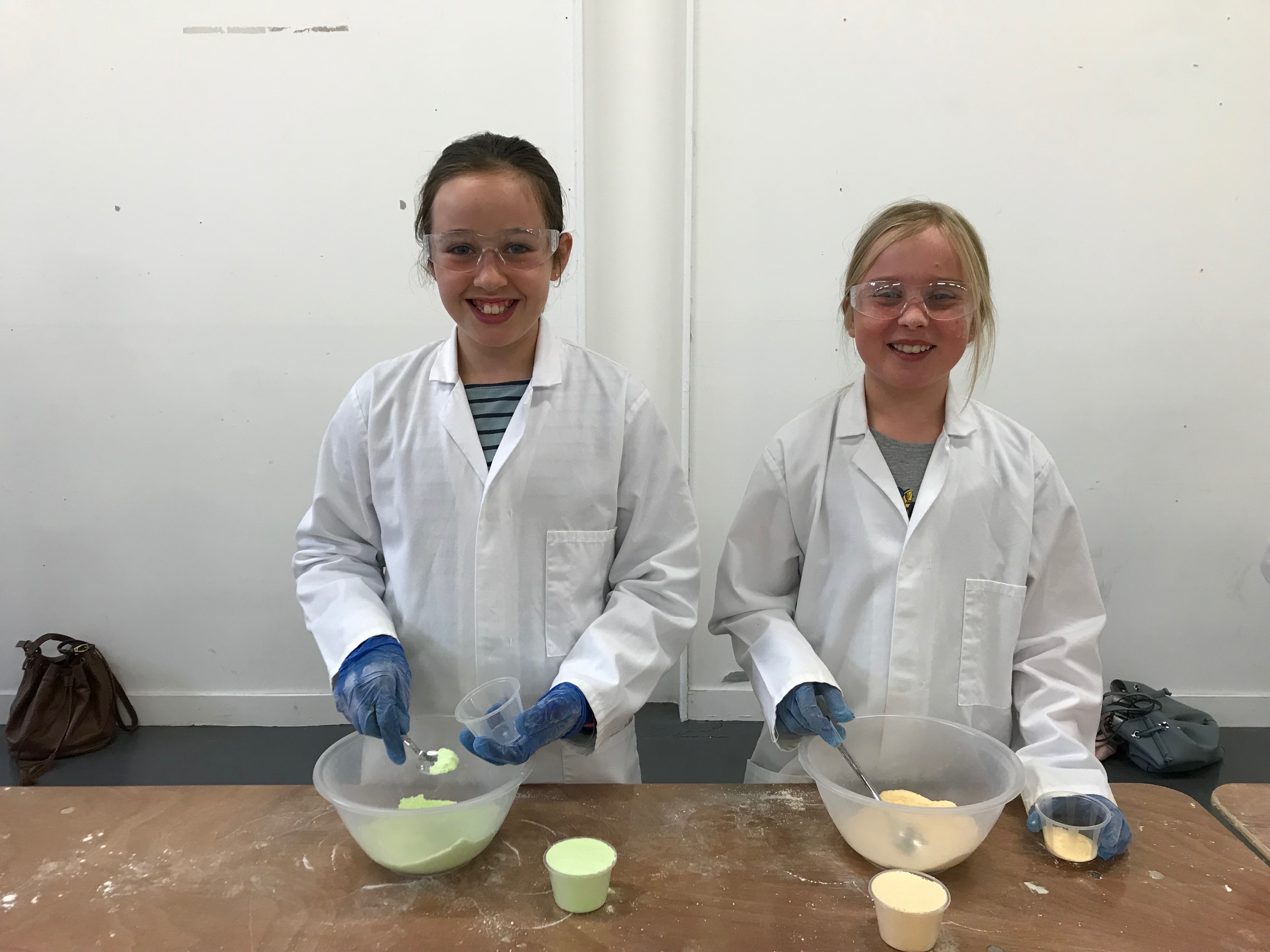
Everyone loves a good bath bomb! They’re fizzy, colourful and make your bath feel extra special! But did you know there’s some cool science going on as you drop that ball of fizz into your bath? This week we’ve been delivering our bath bomb workshop in Hull, Beverley and Scunthorpe.
Making bath bombs is all about acids and alkalines. Our
workshops are aimed at ages 5+ so this is quite a complex topic for the young
children but we demonstrate how we can identify acids and alkalis, using substances
they recognise and they’re always fascinated.
The acid and alkali combination is what makes that fantastic
fizz as you drop the bath bomb into the water. The acid we use is citric acid
and our alkaline is sodium bicarbonate. The combination of these 2 ingredients
added to water causes a chemical reaction, and gives us that fizz!
But what is citric acid? It’s a relatively weak acid that comes from citrus fruits; lemons, limes and oranges. It’s also added to the outside of fizzy sweets to give them that slightly sour, taste!
Sodium bicarbonate, otherwise known as baking powder is a
weak alkaline. If these ingredients are mixed together and then added to water
a chemical reaction occurs. The acid and alkaline neutralize the effects of
each other. A process called neutralization! Carbon dioxide is formed and this
creates rapidly forming bubbles, which is where that fizz comes from! Before
the children make the bath bombs we demonstrate this by adding the ingredients
to a balloon and watching the carbon dioxide inflate the balloon.
During our workshop the children make 2 bath bombs with a choice of colours and fragrances! The most popular fragrance this week has to be bubblegum! They actually look forward to going home and having a bath!
Thanks to everyone who attended our workshops this week!
Next week we have a mixture of volcanoes and slime workshops! See you there!
Our summer holiday workshops are now in full swing! This week we’ve been delivering workshops on volcanoes in Hull and Dry Ice in Beverley. We aim to make our science workshops fun and fully hands-on as we believe children learn better through play and interactivity.
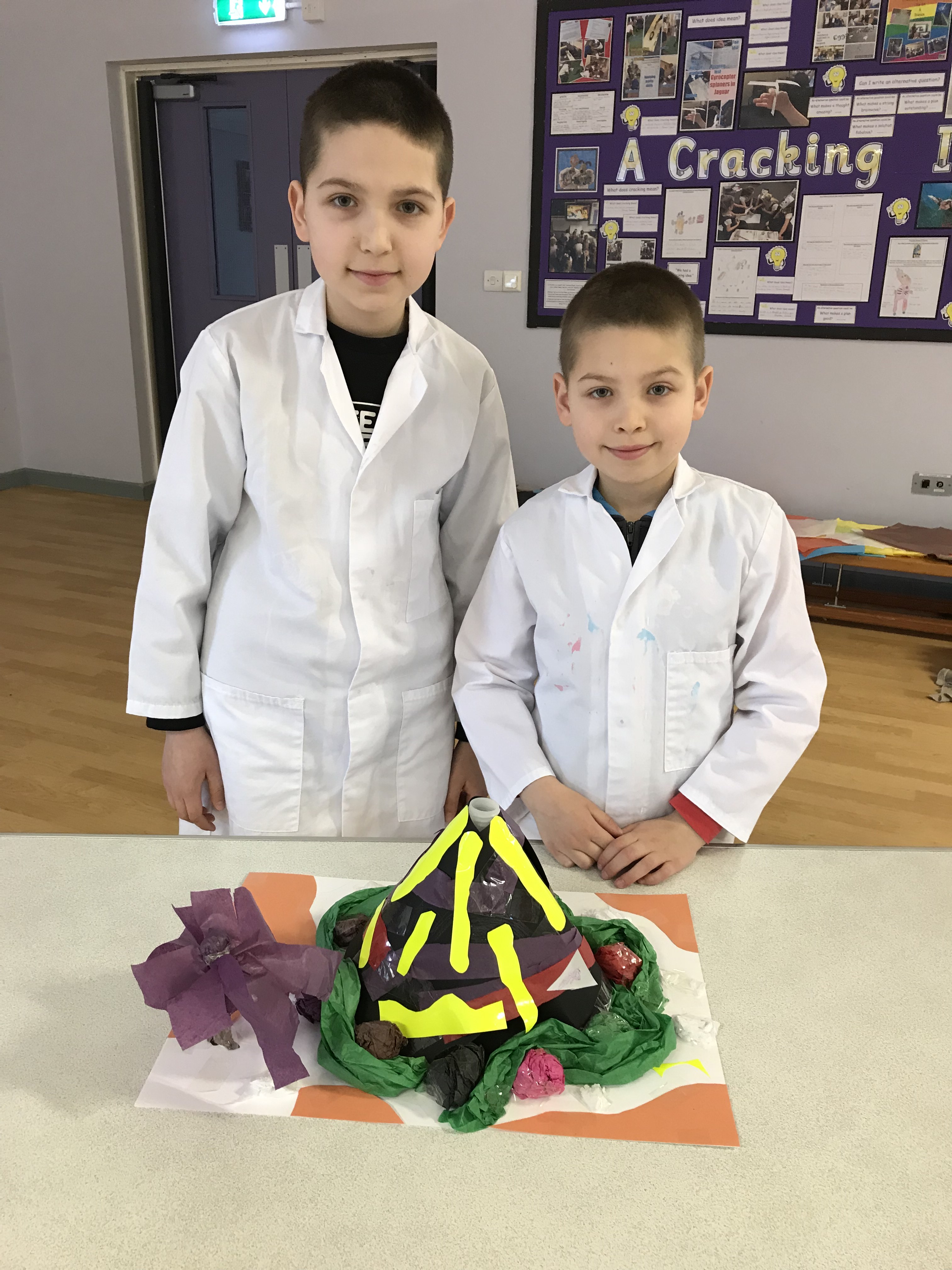
The volcanoes workshop is great fun and involves a bit of creativity. We start by finding out what children know about volcanoes and then we discuss the different types of volcanoes on Earth and on other planets and moons. Children are always amazed at the idea of cryovolanoes! They then get to build and design their own volcano! We love the fact that parents always get involved! It sometimes gets very competitive!
Then it’s time to erupt the volcanoes! We use dry ice and hot water to erupt ours. It looks great and has the added bonus of creating a rumble effect, like an earthquake! We then add in a bit of washing up liquid to create bubble lava, which always gets a big “WOAH”!!
This workshop is also popular in schools when children are studying volcanoes as a topic. More details on our website www.labrascals.co.uk
Today we’ve been at the Parks Children’s centre in Hull providing science fun at a family fun day! We made UV bracelets, slime and provided dry ice experiments. We were incredibly busy with slime being extremely popular as usual.
On Friday we’ll be in Flemingate, Beverley with our dry ice workshop. This is really a lesson on the states of matter, but the children have so much fun with the hands-on experiments they don’t realise they’re learning a fairly complex topic. We have a number of experiments that the children complete themselves after a health and safety briefing. There are always lots of “WOW”moments.
We’ve got lots more holiday workshops to come over the next couple of weeks in Hull, Beverley and Scunthorpe, including bath bombs, slime, volcanoes and planetarium! Book now to avoid disappointment!
We’ve had a busy few weeks doing lots of planning! The summer holidays are creeping up fast and we have lots of exciting workshops planned, including public showings of our new planetarium show “One Giant Leap”. Details of workshops are here https://bookwhen.com/labrascals#focus=ev-sbaw-20190807100000
Our Astronomy Manager, Cosmic Carol is getting ready to jet off to the Atacama Desert in Chile next week after winning a place on the European Southern Observatory social media team for the total solar eclipse. She’ll spend 7 days in the Atacama Desert, visiting various observatories and posting about it on social media. You can follow her on Twitter @Cosmic_Carol
She’ll be watching the solar eclipse on 2nd July from La Silla. The La Silla Observatory is located on the outskirts of the Chilean Atacama Desert, 600 km north of Santiago de Chile and at an altitude of 2400 metres. Like other observatories in this geographical area, La Silla is located far from sources of light pollution and, like the Paranal Observatory, home to the Very Large Telescope, it has one of the darkest night skies on the Earth. La Silla has been an ESO stronghold since the 1960s. Here, ESO operates two of the most productive 4-metre class telescopes in the world.
She will also visit the VLT (very large telescope) based at the Paranal Observatory, famous for being blown up in Quantum of Solace.
And will also visit ALMA . A state-of-the-art telescope to study light with wavelengths of about one millimetre, shining from some of the coldest objects in the Universe, ALMA is a cooperation of the European Southern Observatory (ESO), together with its international partners. The site of ALMA is the 5000-m altitude Chajnantor plateau in northern Chile, one of the driest places on Earth.
If you’re a teacher and you’d like Carol to come into school and talk about her experiences in Chile, send us and email on labrascals1@gmail.com.






 Lab Rascals